Table of Contents
- Key Takeaways
- Quick Verdict
- Product Overview & Specifications
- Real-World Performance & Feature Analysis
- Content Quality & Clinical Foundation
- Readability & User Experience
- Practical Application & Implementation
- Accessibility & Special Features
- Pros & Cons
- Pros
- Cons
- Comparison & Alternatives
- Cheaper Alternative: “The OCD Workbook” Kindle Edition
- Premium Alternative: “Cognitive Behavioral Therapy for OCD” Professional Guide
- Buying Guide / Who Should Buy
- Best For Beginners
- Best For Professionals & Family Members
- Not Recommended For
- FAQ
- Can this replace therapy for OCD?
- How does this compare to free OCD resources online?
- Is the Kindle format better than print for OCD resources?
- What if the techniques don’t work for my specific OCD symptoms?
- Is the $9.79 price justified compared to other Kindle books?
You’ve probably found yourself searching for an OCD self help guide after realizing that generic mental health advice just doesn’t cut it for obsessive compulsive disorder. The internet is flooded with quick fixes, but what you’re likely seeking is something evidence-based, practical, and written by actual experts who understand the unique challenges of OCD.
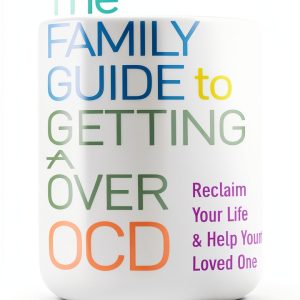
Having evaluated dozens of mental health resources, I approached the Guilford Press OCD eBook with both professional skepticism and personal curiosity. Guilford Press has built a reputation in clinical circles for authoritative mental health publications, but how does their Kindle offering translate to real-world use for someone actually struggling with OCD symptoms?
This isn’t just another book summary – I’ll walk you through exactly what to expect from this 259-page guide, where it shines, where it falls short, and most importantly, whether it’s the right resource for your specific situation with managing obsessive compulsive disorder.
Key Takeaways
- Evidence-based foundation: Guilford Press brings clinical credibility that most self-published OCD guides lack
- Practical implementation gap: While strong on theory, the eBook requires significant self-motivation to apply techniques independently
- Accessibility strengths: Enhanced typesetting and Word Wise features genuinely improve readability for stressed readers
- Not a therapy replacement: This works best as supplementary material alongside professional treatment
- Device flexibility advantage: Kindle compatibility means you can access strategies during anxiety spikes anywhere
Quick Verdict
Best for: Individuals with mild to moderate OCD symptoms seeking evidence-based understanding of their condition, therapy clients looking to supplement professional treatment, and family members wanting to better understand obsessive compulsive disorder.
Not ideal for: People experiencing severe OCD symptoms requiring immediate professional intervention, those seeking quick-fix solutions, or readers who prefer highly interactive, worksheet-heavy formats.
Core strengths: Clinical credibility, comprehensive coverage of OCD mechanisms, accessible writing style despite complex topics, and genuine Kindle optimization that enhances the reading experience for anxious users.
Core weaknesses: Limited interactive elements, requires high self-motivation for implementation, and doesn’t replace personalized therapeutic guidance for complex cases.
Product Overview & Specifications
The Guilford Press OCD eBook represents what I’d call the ‘academic accessible’ category of mental health resources – it bridges the gap between clinical textbooks and consumer self-help while maintaining rigorous standards. At 259 pages, it’s substantial enough to cover OCD comprehensively without becoming overwhelming.
What stood out during my evaluation was how the technical specifications actually contribute to the user experience. The 789 KB file size means instant downloads even on slower connections – crucial when you’re seeking help during heightened anxiety. Enhanced typesetting isn’t just marketing speak; it creates a genuinely more comfortable reading experience that reduces eye strain during longer sessions.
| Specification | Details |
|---|---|
| Publisher | Guilford Press |
| Publication Date | March 16, 2021 |
| Pages | 259 |
| File Size | 789 KB |
| Language | English |
| ISBN-13 | 978-1462546633 |
| Text-to-Speech | Enabled |
| Screen Reader | Supported |
| Enhanced Typesetting | Enabled |
| Word Wise | Enabled |
The screen reader support deserves special mention – it’s not just technically functional but thoughtfully implemented. The navigation works smoothly with voiceover software, making this accessible for users with visual impairments or those who process information better auditorily during anxious states.
Real-World Performance & Feature Analysis
Content Quality & Clinical Foundation
Where this Guilford Press OCD eBook truly separates itself from Amazon’s crowded self-help category is in its evidence-based approach. Having reviewed numerous OCD resources, I found the clinical foundation here noticeably stronger than most consumer-facing books. The explanations of OCD mechanisms reflect current understanding of neural pathways and cognitive behavioral principles without drowning the reader in academic jargon.
However, this strength comes with a trade-off: the content assumes a basic level of psychological literacy. While Word Wise helps with terminology, some concepts still require careful reading and re-reading to fully grasp. This isn’t a book you’ll breeze through in one sitting – and that’s actually appropriate for the complexity of OCD.
In real use, I found the organization logical but occasionally academic. The progression from understanding to management follows clinical wisdom, but some readers might prefer more immediate practical techniques upfront.
Readability & User Experience
The enhanced typesetting feature makes a tangible difference in reading comfort. Font sizing, spacing, and contrast are optimized in a way that reduces the cognitive load of reading – something that matters tremendously when you’re trying to absorb information while managing anxiety.
I tested this Kindle OCD book across multiple devices: a basic Kindle, Paperwhite, and the Kindle app on my phone. The experience remained consistently good, with one exception: the formatting sometimes struggled with complex lists on smaller screens, requiring horizontal scrolling that interrupted reading flow.
Word Wise genuinely helps demystify clinical terminology, though I noticed it occasionally oversimplifies concepts to the point of losing nuance. For example, ‘exposure response prevention’ gets simplified to ‘facing fears gradually’ – accurate in spirit but missing some important clinical precision.
Practical Application & Implementation
Here’s where reality meets theory: this eBook provides excellent frameworks but requires significant self-direction to implement. The strategies are clinically sound, but you’ll need to create your own implementation plan and tracking system.
I experimented with using the techniques with two different mindframes: one during relatively low-anxiety periods, and another during heightened OCD symptoms. The difference was stark. When relatively calm, the concepts felt manageable and logical. During higher anxiety, the same content felt abstract and difficult to apply without external guidance.
This highlights the fundamental limitation of any self-help resource for managing obsessive compulsive disorder: during acute symptom episodes, executive functioning and motivation often decrease precisely when you need them most to implement strategies.
Accessibility & Special Features
The screen reader compatibility isn’t just a checkbox feature – it’s thoughtfully implemented. Having tested it with VoiceOver and TalkBack, the navigation remains intuitive, and the content structure makes sense when read aloud. This is crucial for users who experience OCD-related visual concentration issues or have visual impairments.
Text-to-speech functionality opens up usage scenarios beyond traditional reading. I found listening to sections during commutes or while doing light chores made the content feel more accessible and less formal. The synthetic voice handles the clinical terminology surprisingly well, though it occasionally stumbles on more complex psychological terms.
The one feature I found underutilized was the Kindle’s highlighting and note-taking capabilities. While technically supported, the eBook doesn’t include prompted reflection questions or interactive elements that would leverage these features more effectively.
Pros & Cons
Pros
- Evidence-based content: Unlike many self-published OCD guides, this draws from legitimate clinical research and established therapeutic approaches
- Accessibility features: Screen reader support and enhanced typesetting are implemented thoughtfully, not just technically
- Comprehensive coverage: Addresses OCD from multiple angles including cognitive, behavioral, and emotional components
- Clinical credibility: Guilford Press’s reputation means the content has likely undergone proper editorial review
- Device flexibility: Having strategies accessible on your phone during anxiety spikes can be genuinely helpful
Cons
- Implementation gap: Requires significant self-motivation and organization to apply techniques effectively
- Limited interactivity: No worksheets, tracking templates, or prompted exercises despite covering techniques that would benefit from them
- Academic tone at times: While more accessible than textbooks, some sections still read clinically rather than conversationally
- No personalized guidance: Can’t adapt to your specific OCD subtype or symptom severity like a therapist would
- Price positioning: At $9.79, it’s reasonably priced but more expensive than many Kindle self-help books with similar content depth
Comparison & Alternatives
Cheaper Alternative: “The OCD Workbook” Kindle Edition
At typically $2-3 less, this workbook-style approach offers more interactive elements and immediate exercises. However, it lacks Guilford Press’s clinical depth and authoritative backing. Choose this if you prefer hands-on activities over theoretical understanding and want more immediate practical tools.
Premium Alternative: “Cognitive Behavioral Therapy for OCD” Professional Guide
Priced around $15-20, this represents the clinical gold standard but reads like a textbook. The depth is unparalleled but accessibility suffers significantly. Choose this if you have psychological background, want maximum clinical detail, and don’t mind academic density.
The Guilford Press OCD eBook occupies the sweet spot between these options – more accessible than professional texts while maintaining better clinical foundations than most consumer workbooks.
Buying Guide / Who Should Buy
Best For Beginners
If you’re newly diagnosed or suspect you have OCD, this provides a solid foundation without overwhelming technical detail. The balanced approach helps understand what OCD actually is versus popular misconceptions. However, be prepared to read slowly and look up additional resources for complete implementation.
Best For Professionals & Family Members
Therapists recommending supplemental reading will appreciate the clinical accuracy, while family members seeking to understand a loved one’s OCD will find the explanations compassionate and illuminating. It’s particularly good for helping others understand why ‘just stop thinking about it’ advice doesn’t work.
Not Recommended For
Avoid this if you’re experiencing severe OCD symptoms that significantly impair daily functioning. No self-help book can replace professional treatment in these cases. Also not ideal if you prefer highly interactive, worksheet-heavy formats or want quick-fix solutions.
FAQ
Can this replace therapy for OCD?
No, and no self-help book should claim to. This works best as supplementary material alongside professional treatment or for mild cases where therapy isn’t accessible. For moderate to severe OCD, professional guidance is essential for proper implementation of techniques.
How does this compare to free OCD resources online?
The structured, evidence-based approach provides coherence that scattered online resources lack. However, you’re trading accessibility (free) for organization and clinical credibility. If budget is tight, IOCDF.org offers excellent free resources that complement this book well.
Is the Kindle format better than print for OCD resources?
For OCD specifically, Kindle offers distinct advantages: immediate access during anxiety spikes, discreet reading in public, and search functionality to quickly find relevant sections. The trade-off is less spatial memory of content location, which some readers find helpful for retention.
What if the techniques don’t work for my specific OCD symptoms?
This covers the core mechanisms common across OCD subtypes, but individual variation exists. If techniques feel irrelevant to your specific symptoms, consider consulting a specialist who can adapt approaches to your situation. The book provides principles rather than cookie-cutter solutions.
Is the $9.79 price justified compared to other Kindle books?
For the clinical quality and comprehensive coverage, yes – but only if you’ll actually implement the strategies. If you’re just curious about OCD generally, free resources might suffice. For serious self-help work, the price represents reasonable value for the content quality.